The octagon is a battlefield measured in inches. The space between two fighters—whether they're circling at kicking range, locked in a Thai clinch, or scrambling for position on the canvas—determines everything. It dictates which weapons are available, which defenses are possible, and ultimately, who walks out with their hand raised.
After analyzing 631,347 significant strikes across 8,534 UFC fights spanning nearly three decades, we've mapped the complete evolution of positional warfare in mixed martial arts.
What the data reveals isn't just interesting—it challenges the fundamental narratives about how this sport has changed.
I. The Three Kingdoms: Distance, Clinch, and Ground
Every moment of an MMA fight exists in one of three positions. Here's where the action actually happens in the modern era (2024–25):
And here's how those numbers look across the complete historical record—631,347 significant strikes across 8,534 fights from 1997 through 2025:
| Position | Strikes (All-Time) | Share | The Reality |
|---|---|---|---|
| Distance | 458,148 | 72.6% | The default state—boxing, kickboxing, karate range |
| Clinch | 84,299 | 13.4% | The overlooked battleground for position control |
| Ground | 88,900 | 14.1% | Where fights are finished |
The popular narrative claims MMA has become "just kickboxing." But look closer: clinch and ground work each account for over 13% of significant strikes—that's 173,199 strikes combined in grappling positions.
This isn't a striking sport with occasional grappling. This is a three-dimensional chess match where the ability to control which position you fight in matters as much as your skill within that position.
II. The Great Transformation: 1997 to 2025
Here's where the story gets remarkable. The sport you're watching today bears almost no resemblance to its origins.
THE EVOLUTION OF FIGHTING RANGES
Percentage of significant strikes landed by position (1997-2025)
The numbers tell a story of complete metamorphosis:
| Era | Distance | Clinch | Ground | The Meta |
|---|---|---|---|---|
| 1997 | 26.8% | 21.4% | 51.8% | Ground-and-pound dominates |
| 2005 | 44.9% | 21.7% | 33.4% | Striking begins to rise |
| 2012 | 68.4% | 15.1% | 16.5% | Distance takes over |
| 2025 | 81.8% | 9.1% | 9.1% | Modern striking supremacy |
In 1997, more than half of all significant strikes happened on the ground. Fighters like Mark Coleman and Don Frye built careers on taking opponents down and battering them with ground-and-pound. The clinch was a transition point, not a destination.
By 2025, ground fighting has collapsed to just 9.1% of striking output. That's not a gradual decline—it's an 82% reduction in ground fighting as a percentage of total offense.
Why Did This Happen?
1. The Evolution of Takedown Defense Modern fighters sprawl, hand-fight, and cage-wrestle at levels that would have seemed impossible in the early days. Our data shows takedowns now succeed at just 37.49%—nearly two-thirds of all shots are stuffed.
2. The Influx of Elite Strikers Kickboxers, Muay Thai champions, and Olympic boxers flooded MMA, bringing technical striking that made stand-up fighting viable against wrestlers.
3. Rule Changes and Judging The shift toward favoring volume and octagon control in judging made distance striking more rewarded than grinding top control.
4. The Guard Revolution As bottom-game jiu-jitsu improved, ground-and-pound became riskier. Fighters learned to sweep, submit, and stand up, reducing the reward for taking fights to the mat.
III. The Accuracy Paradox
Volume tells one story. Efficiency tells another—and it's surprising.
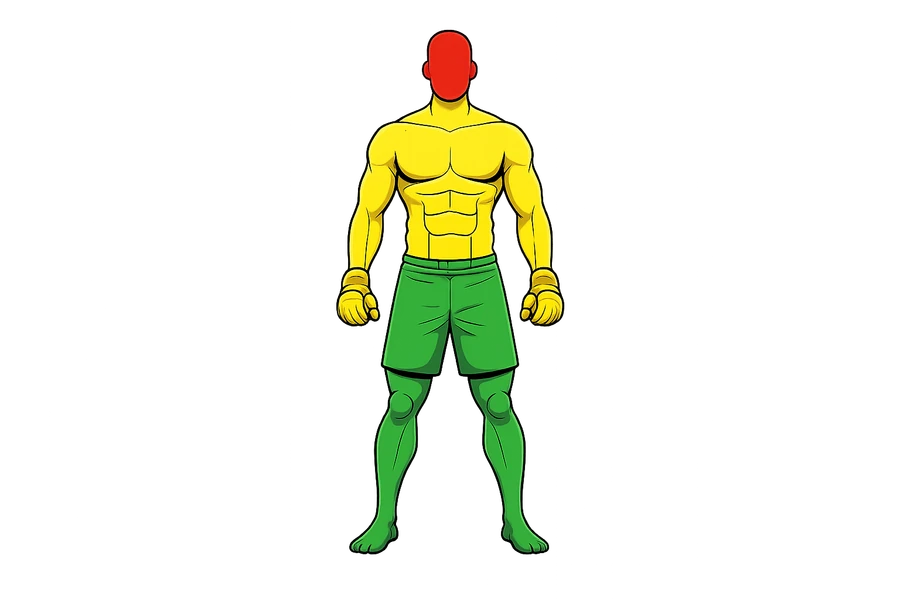
| Position | Accuracy | Volume | The Trade-off |
|---|---|---|---|
| Clinch | 42.18% | 13.4% | Highest accuracy, most underutilized |
| Distance | 38.81% | 72.6% | Default choice, moderate accuracy |
| Ground | 27.2% | 14.1% | Lowest accuracy, but decisive |
Wait—clinch striking is MORE accurate than distance striking?
Yes. By 3.37 percentage points. The dirty boxing, the knees, the elbows in the tie-up—they land at the highest rate of any position.
Why Clinch Accuracy Leads
Limited Escape Routes: At distance, fighters have the entire octagon to evade. In the clinch, options narrow to: break free, get taken down, or absorb leather.
Obscured Vision: Head-to-head contact limits what opponents can see. Elbows, uppercuts, and knees come from blind angles.
Control Creates Offense: Underhooks, overhooks, and body locks create firing platforms. Control one side, attack the other. Muay Thai fighters have exploited this for generations.
The Ground Game Paradox
Ground strikes are the least accurate at 27%—yet they end fights at a higher rate than any other position. The numbers make this undeniable.
When we classify each fight by its dominant striking position, the finish rate gap is stark:
| Dominant Position | Fights | Finish Rate | KO/TKO | Submissions |
|---|---|---|---|---|
| Ground | 1,465 | 69.0% | 628 | 383 |
| Clinch | 520 | 61.5% | 191 | 129 |
| Distance | 6,516 | 47.2% | 1,961 | 1,114 |
Ground-dominant fights finish 22 percentage points more often than distance-dominant fights. That's not a rounding error—it's the difference between a decision grind and a fight-ending beatdown.
Volume Over Precision: When you have top control, accuracy is almost irrelevant. You can throw 20 strikes and land 5. The accumulated damage, the exhaustion, the psychological weight of being held down and hit—it all compounds.
Defense Collapses Under Pressure: Ground accuracy actually improves as fights progress:
| Round | Ground Accuracy | Strikes |
|---|---|---|
| Round 1 | 64.5% | 36,933 |
| Round 3 | 65.8% | 21,011 |
| Round 5 | 71.3% | 1,070 |
The ground specialist who gets to Round 3 or 4 on top is looking at a 71.3% hit rate. Defense breaks down. Frames weaken. Volume becomes devastating.
IV. Control Time: The Hidden Metric
AVERAGE CONTROL TIME PER FIGHT
Minutes of control time per fight (1999-2025)
Control time—the minutes spent in dominant grappling positions—tells its own story about the evolution of MMA.
Key Finding: Average control time per fight peaked around 6.7 minutes in 2001 during the ground-fighting era, dropped to a low of 3.9 minutes in 2017-2019, and has stabilized around 4.0-4.4 minutes in recent years.
This isn't just about position preference—it reflects the complete ecosystem:
- Better takedown defense means less time on the ground
- Improved guard work means faster stand-ups
- Referee intervention has become more active against stalling
- Fighters prioritize damage over control
V. The Takedown Economy
At 37.49% success rate, takedowns are failing nearly two-thirds of the time.
| Metric | Value |
|---|---|
| Total Attempted | 48,268 |
| Total Landed | 18,096 |
| Success Rate | 37.49% |
What This Means:
- Modern MMA fighters sprawl, hand-fight, and cage-wrestle at historically high levels
- The "wrestling base" advantage has diminished
- Strikers have more tools than ever to keep fights standing
- But when takedowns DO land, the top position is still devastating
VI. Target Selection: The Inefficiency of Head Hunting
Where strikes land reveals another layer of strategic reality.
Strike Target Selection
Head hunting dominates at 63% — leg kicks underutilized
Key Finding:
63% head, 21% body, 16% legs — leg kicks are the great equalizer
| Target | Strikes | Share | Accuracy |
|---|---|---|---|
| Head | 400,570 | 63.0% | 36.53% |
| Body | 128,187 | 20.2% | 69.24% |
| Leg | 106,955 | 16.8% | 75.64% |
Read that accuracy column carefully.
Head strikes land just 36% of the time. Body shots connect at 69%. Leg kicks hit at 76%.
The Great Inefficiency
Nearly two-thirds of all strikes target the head, yet head shots are the least accurate weapon in MMA.
The Math:
- Throwing 100 head strikes: ~37 land
- Throwing 100 body strikes: ~69 land
- Throwing 100 leg kicks: ~76 land
You need 2.7 head strike attempts to land one clean shot. You need just 1.3 leg kick attempts.
Why Fighters Still Chase the Head
- The Knockout Lottery: Only head shots (and rare body KOs) end fights instantly
- Scoring Impact: Judges favor visible head damage
- Highlight Reels: Nobody goes viral for calf kicks
- Natural Instinct: The head is the highest, most visible target
The Underutilized Leg Kick
Leg kicks represent just 17% of offense but land at 76% accuracy. The fighters who understand this—who build strategies on calf kicks, inside leg kicks, and oblique kicks—are playing a mathematically superior game.
A fighter who throws 50 leg kicks will land 38. A fighter who throws 50 head shots will land 18. Over three rounds, that's a 20-strike differential—without accounting for the mobility damage leg kicks cause.
VII. The Knockdown Equation
Total knockdowns in our dataset: 3,647
That's roughly one knockdown every 2.3 fights.
| Metric | Value |
|---|---|
| Total Significant Strikes | 631,347 |
| Total Knockdowns | 3,647 |
| Knockdown Rate | 0.58% |
Fewer than 1 in 173 significant strikes produces a knockdown. Every knockdown you see represents either:
- Perfect timing and technique
- Accumulated damage creating vulnerability
- A defensive mistake by the hurt fighter
The rarity makes each knockdown precious. The fighters who can generate them consistently—Pereira, Ngannou, Holloway—are playing a different game than everyone else.
VIII. The Round-by-Round Shift
Position distribution isn't static—it evolves within fights.
| Round | Distance | Clinch | Ground |
|---|---|---|---|
| Round 1 | 69.7% | 15.2% | 15.1% |
| Round 2 | 72.9% | 12.7% | 14.4% |
| Round 3 | 74.9% | 12.1% | 13.0% |
| Round 4 | 81.5% | 9.2% | 9.3% |
| Round 5 | 82.3% | 9.0% | 8.7% |
The pattern is clear: Fights become progressively more distance-oriented as rounds accumulate.
Why Championship Rounds Go To Distance
1. Fatigue Favors Distance Clinch work and grappling are exhausting. Tired fighters can't sustain wrestling pressure. Distance fighting requires less explosive energy per exchange.
2. Respect Accumulates By Round 4-5, both fighters know each other's power. Takedown attempts become riskier as legs tire. Fighters settle into their "true" range.
3. Grappling Windows Close Fresh legs mean more successful takedowns—15.1% of Round 1 happens on the ground. By Round 5, that drops to 8.7%.
The Tactical Implication: If you're a grappler, you have a shrinking window. Impose your game in Rounds 1-2, where 27%+ of the fight happens in clinch or ground. Wait until Round 5, and you're fighting in an 82.3% distance environment.
IX. The Specialists: Masters of Their Domain
Distance Specialists
Top Distance Strikers
Fighters who live at boxing/kickboxing range
Key Finding:
Pure distance strikers keep 100% at range — never clinch or grapple
These fighters live at boxing range. They use footwork, angles, and distance management to prevent clinches and takedowns. Their entire game revolves around keeping the fight standing at striking range.
The Distance Striker's Toolkit:
- Jab to establish range and timing
- Lateral movement to avoid clinches
- Elite takedown defense
- Volume output at safe distance
Clinch Specialists
Top Clinch Specialists
Fighters who dominate in the tie-up with dirty boxing, knees, and elbows
Key Finding:
Clinch specialists land at 41.88% accuracy — the highest of any position
The most underappreciated fighters in MMA. They understand something critical: the clinch is both a position and a transition control center.
From clinch, you can:
- Land the highest-accuracy strikes in MMA (42.18%)
- Set up takedowns with inside trips and body locks
- Drain your opponent's cardio through constant pressure
- Dictate where the fight goes next
Ground Specialists
Top Ground Strikers
Fighters who do their damage on the mat
Key Finding:
Elite grapplers land 70-85% on the ground — ground-and-pound masters
These fighters don't just take you down—they hurt you on the ground. Their striking becomes more dangerous after securing a takedown, not less.
The Ground Specialist's Formula:
- Secure the takedown
- Establish positional control
- Rain down volume strikes
- Force the finish or domination
X. Historical Legends: Masters of Position
The complete dataset reveals how UFC legends mastered specific positions—and how the greatest champions transcended positional limitations entirely.
Distance Masters
Anderson Silva — The Spider's reign was built on supernatural distance management. His ability to make opponents miss by millimeters, then counter with precision, redefined what was possible at range. Career striking accuracy of 62.5% at distance.
Max Holloway — Volume incarnate. Holloway doesn't just win at distance; he drowns opponents there, throwing 7+ significant strikes per minute while absorbing minimal damage. The modern template for distance dominance.
Israel Adesanya — Kickboxing translated perfectly. Adesanya's ability to control range, invite attacks, and counter has made him nearly untouchable at distance. His takedown defense keeps him in his kingdom.
Clinch Specialists
Randy Couture — The original dirty boxer. Couture weaponized the clinch when others saw it as a transition. His collar ties, short elbows, and grinding pressure created a template that still influences heavyweight fighting.
Jon Jones — Perhaps the most complete clinch fighter ever. Jones uses his reach to control distance, then devastates with elbows and knees in the tie-up. His clinch takedowns are seamless extensions of his striking.
Anderson Silva — Often overlooked: Silva's clinch knees were as dangerous as his distance striking. His Muay Thai plum clinch ended multiple fights.
Ground Dominators
Among fighters with 300+ significant strikes in the UFC, no one weaponized the ground more systematically than this group:
Matt Hughes (62.95% ground strikes, 502 total) — The Hall of Fame welterweight champion built his entire career on taking opponents down and dismantling them. Hughes didn't just control—he finished from top position at a rate that defined an era.
Khabib Nurmagomedov (60.04% ground strikes, 533 total) — The modern standard. Khabib's ground-and-pound wasn't subtle: he went to the mat, established dominant position, and systematically broke opponents. Undefeated at 29-0 with a 60% ground strike rate tells the full story.
Tito Ortiz (54.47% ground strikes, 514 total) — The Huntington Beach Bad Boy turned ground control into a 13-year career. Tito understood that the cage plus top position equals a finishing formula.
Jon Fitch (50.42% ground strikes, 474 total) — The most dominant decision machine in UFC welterweight history. Fitch's ground control was so complete it prompted a rule discussion—top position, constant pressure, zero escapes.
Mark Coleman and Dan Severn — The pioneers who first built this template in the 1990s before UFC stats tracking was comprehensive. Coleman's blueprint remains the foundation everything above is built on.
The Complete Fighters
Georges St-Pierre — The GOAT of positional control. GSP didn't just excel in each position—he dictated which position the fight happened in. His ability to take elite wrestlers down and outstrike elite strikers came from understanding transitions, not just positions.
Demetrious Johnson — Seamless. Mighty Mouse flowed between positions like water, attacking wherever openings appeared. His ability to threaten submissions, ground-and-pound, and distance striking simultaneously made him impossible to prepare for.
Amanda Nunes — Power at every range. Nunes could knockout strikers at distance, dirty-box clinch fighters, and ground-and-pound grapplers. Her positional versatility made her the most dominant women's fighter ever.
The Common Thread: These legends didn't just master positions—they controlled when and where transitions happened. That's the difference between a specialist and a champion.
XI. Strategic Implications: The Complete Playbook
Synthesizing all the data on accuracy, target selection, and positional control, we can build a strategic matrix for modern MMA:
Strategic Playbook
Select your fighter type to see the strategic blueprint
▸ Game Plan
- 1.Keep the fight at kicking/punching range
- 2.Use jab and footwork to maintain distance
- 3.Sprawl and break clinches immediately
- 4.Win where you're strongest
▸ Training Focus
- ●Takedown defense (sprawls, footwork, cage awareness)
- ●Breaking clinches immediately
- ●Striking off the back foot
- ●Cage cutting without getting tied up
⚠️ Reality Check
You're giving up 27% of the fight if clinch/ground happens. One takedown in Round 3 can erase two rounds of distance dominance.
For Coaches
Clinch work is systematically undervalued. It has the highest accuracy, controls transitions, and is only 9-13% of modern fights. Developing elite clinch skills creates asymmetric advantage.
- ●Train all positions with emphasis on transitions
- ●Clinch work is underemphasized in most gyms
- ●Ground-and-pound is still highly effective
- ●Positional control wins fights
XII. The Next Evolution: Where MMA Is Heading
Based on three decades of data, here's what the future holds:
1. The Clinch Renaissance
With 42.18% accuracy (highest of all positions), expect more fighters to emphasize:
- Muay Thai clinch training
- Greco-Roman wrestling integration
- Judo throws and trips from the tie-up
- Dirty boxing as a primary weapon
The opportunity is mathematical: clinch striking is 3.4% more accurate than distance striking but accounts for only 13% of offense. Fighters who exploit this gap will have structural advantages.
2. Ground-and-Pound Resurgence
While ground strikes have dropped to just 9.1% of modern offense, their fight-ending potential remains unmatched. The wrestlers who add genuine finishing ability—not just control—will dominate:
- More emphasis on damage from top position
- Ground striking becoming standard training
- Wrestlers with knockout power (like Jailton Almeida) emerging as a new archetype
3. Distance Striking Refinement
73% of the fight happens at distance, requiring:
- More sophisticated footwork
- Better takedown defense integration
- Improved cage craft
- Strategic striking (accuracy over volume)
The volume era may be ending. As tactical awareness and defensive techniques improve across the roster, the premium will shift from pure volume to shot selection and precision. The fighters who land cleaner rather than more will rise.
4. The Death of the Specialist
The data is unforgiving: pure specialists face a math problem.
- Distance-only fighters give up 27% of the fight
- Ground-only fighters must survive 73% on their feet
- Clinch-only fighters rarely get sustained clinch time
The future belongs to fighters who are elite in one position, competent in all, and masterful at controlling transitions.
5. The Rise of Fight IQ
With all positions becoming more competitive, the differentiator becomes when to use each skill:
- Recognizing when grappling windows open (early rounds)
- Understanding when to chase vs. preserve energy
- Reading opponents' positional weaknesses in real-time
- Adapting strategy mid-fight
The champions of 2030 won't just be the most skilled—they'll be the smartest.
XIII. The Bottom Line
Where are fights won?
- At distance, in volume (73-82% of the fight happens here)
- On the ground, in finishes (27% accuracy but fight-ending damage)
- In the clinch, in control (highest accuracy, transition dominance)
What the evolution tells us:
The sport has transformed from a ground-based grappling contest (51.8% ground in 1997) to a striking-dominant discipline (81.8% distance in 2025). But this doesn't mean grappling is obsolete—it means the fighters who CAN grapple have increasingly rare and valuable skills.
The modern MMA truth:
The octagon isn't three separate arenas—it's one continuous battlefield. The ability to control where you fight matters as much as how you fight. Position is everything.
631,347 strikes confirm it.
Based on analysis of 631,347 significant strikes across 8,534 UFC fights involving 2,632 fighters from 1997-2025.
Methodology: Data sourced from UFCStats.com covering the complete UFC historical database from 1997 through December 2025. Position analysis categorizes strikes by distance (stand-up range), clinch (tie-up/dirty boxing range), and ground (either fighter grounded). Target analysis categorizes by head, body, and leg. Accuracy calculated as (landed / attempted) x 100. Round-by-round analysis limited to Rounds 1-5. Fighter specialization determined by percentage of strikes thrown from each position with minimum 50 total strikes. Takedown success rate calculated across all recorded attempts. Control time extracted from official UFC statistics where available.